
October 25, 2026
Moving boxes do not have to cost anything. In San Francisco, free cardboard shows up all over the city if you know where to look. This guide covers local sources, how to spot boxes worth using, and how to recycle them after move day.
Check Neighborhood Groups and Online Marketplaces
Start where neighbors already trade free stuff. Bay Area Buy Nothing groups and Nextdoor are active, and boxes appear daily. Good boxes go fast, so set alerts and reply with a clear pickup time.
Search terms matter. Use moving boxes and boxes as separate searches, because some posts only say boxes. Check the posting date before you reply; old posts are usually gone.
- Buy Nothing groups on Facebook or the Buy Nothing app: post a request and neighbors often leave boxes on the porch.
- Craigslist free section: search moving boxes, sort by date, and contact the newest posts.
- Nextdoor: ask in your neighborhood feed, especially after the first of the month.
- Facebook Marketplace: filter by free and look for moving box listings.
Ask Local Stores About Their Delivery Days
Grocery stores, liquor stores, bookstores, and farmers market vendors unpack shipments on regular schedules. A polite ask at the back room of a grocery or liquor store can work when staff are unpacking. Ask the manager which delivery day works best, and many will set boxes aside. Produce boxes can be damp and smell like fruit, so use those only for sturdy items or skip them. Dry goods boxes from paper towels or canned items are cleaner. Coffee shops also get daily deliveries and usually have small, sturdy boxes for books and kitchen gear.

Farmers market vendors break down boxes early in the morning, so arrive before the market gets busy. Ask the same vendor more than once; once they know you, they may hold a stack for the next delivery.
Look in Your Building’s Recycling Room
After move-in weekends, apartment recycling rooms fill with cardboard. Many tenants leave boxes behind, especially near the first of the month. Check with the building manager before taking any, and look for a designated free-items area. Move-out piles in hallways or loading docks can also hold usable boxes. If your building has no recycling room, leave a note on the lobby bulletin board and a neighbor who just unpacked will often reply.
If you see a pile near the trash room, check the bottom boxes too. The best ones are often underneath, and the top ones may have been sitting in moisture.
Choose the Right Box for the Job
Used boxes are fine for clothes, linens, and books if they are dry and sturdy. For fragile or heavy items, pick boxes with solid corners and no soft spots. Avoid boxes that held food that attracts pests, and check for stains, tape residue, and crushed edges. Press on the sides to test strength; a good box should not buckle. If you are packing dishes or hanging clothes, a few specialty boxes from a moving supply store are worth the cost.
Wardrobe boxes, dish packs, and picture boxes cost money, but they protect better than free boxes. Buy a few for the fragile or awkward items, and use free boxes for the rest.
Prep Boxes Before You Pack
Before packing, wipe the outside of each box with a damp cloth. Check the bottom flaps and reinforce tears with packing tape. Fold boxes flat if you store them before move day, and keep them in a dry spot off the garage floor. When you pack, tape the bottom seam in an H pattern so the box holds heavier items. Label each box on the side with the room name and a short list of contents, not on the top.
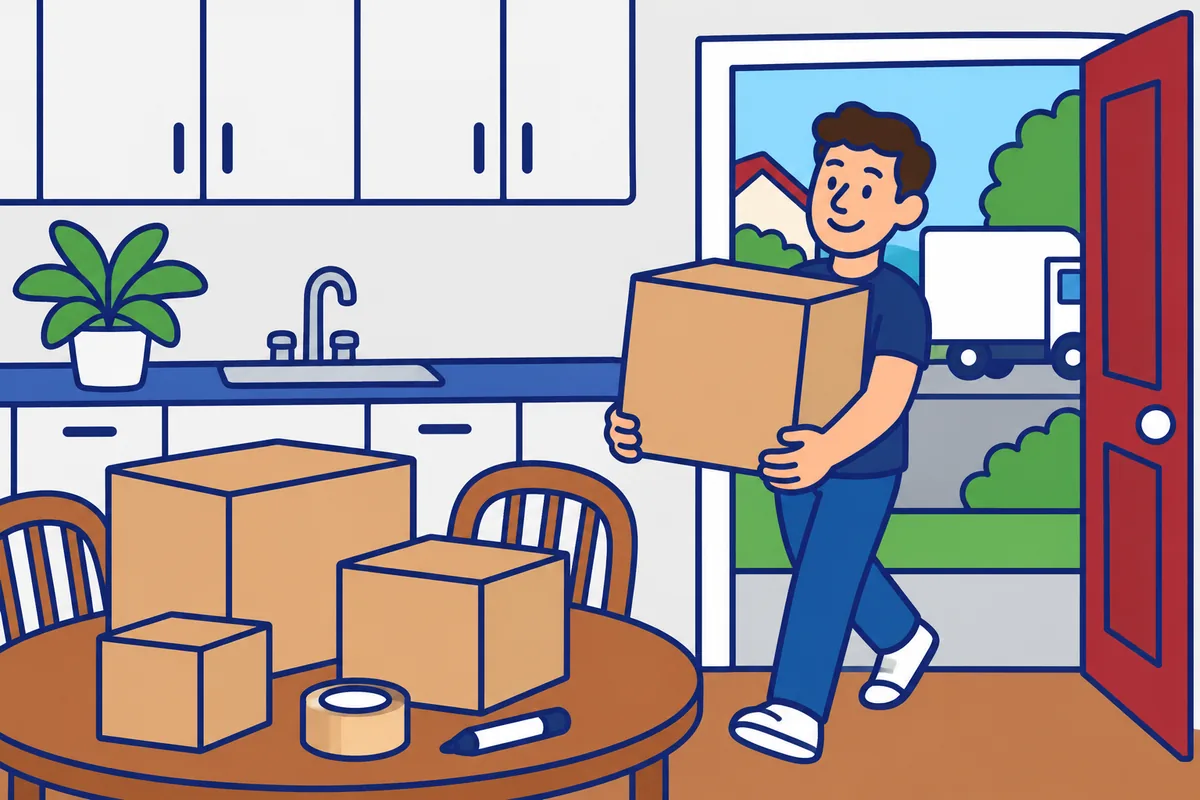
Stack filled boxes by room in the hallway, not in front of the door. Keep a marker and tape nearby so you can seal and label as you go.
Plan the Right Number of Boxes and Reuse Them
Estimate the number of boxes by the size of your home. A studio needs far fewer than a house, so round up. After the move, pass boxes along through the same Buy Nothing, Nextdoor, or Craigslist channels. In San Francisco, flatten cardboard and put it in the blue cart; apartment buildings may have their own recycling rules. Charities sometimes accept used boxes too.
Check with your building before move day about where to leave boxes for pickup. Some buildings have a service elevator or loading dock reservation, and knowing the rules saves time on moving day.
If you would rather not pack everything yourself, include packing and unpacking in your estimate request. Tell the mover how many boxes you already have, so the estimate reflects the actual load.
Boxes are the easy part. Once your pile is ready, request an estimate and include packing help from our crew for the rest of the move.