
October 6, 2026
Packing dishes for a move is about keeping fragile items from shifting and taking impact. Use small, sturdy boxes, wrap each piece individually, and set plates on their edge. Those three habits help a kitchen arrive intact, even from a walk-up apartment with narrow stairs.
The main goal is to keep every plate, bowl, and glass from touching its neighbor. With the right materials and a few hours, you can pack a whole kitchen without breakage. The steps below cover boxes, wrapping, and loading.
Start with the right boxes and materials
For heavy plates, choose small boxes so the weight stays manageable. Dish pack boxes with double walls are a good choice for china and glassware because they handle pressure from stacked items. Line the bottom with crumpled paper or foam to cushion the first layer.
You will also need packing paper, bubble wrap, tape, and a marker. Packing paper works for most items, and bubble wrap adds extra protection for glasses and delicate pieces. Skip newspaper for fine china; the ink can transfer and leave stains. Use the marker to label every box clearly.
Wrap each dish individually
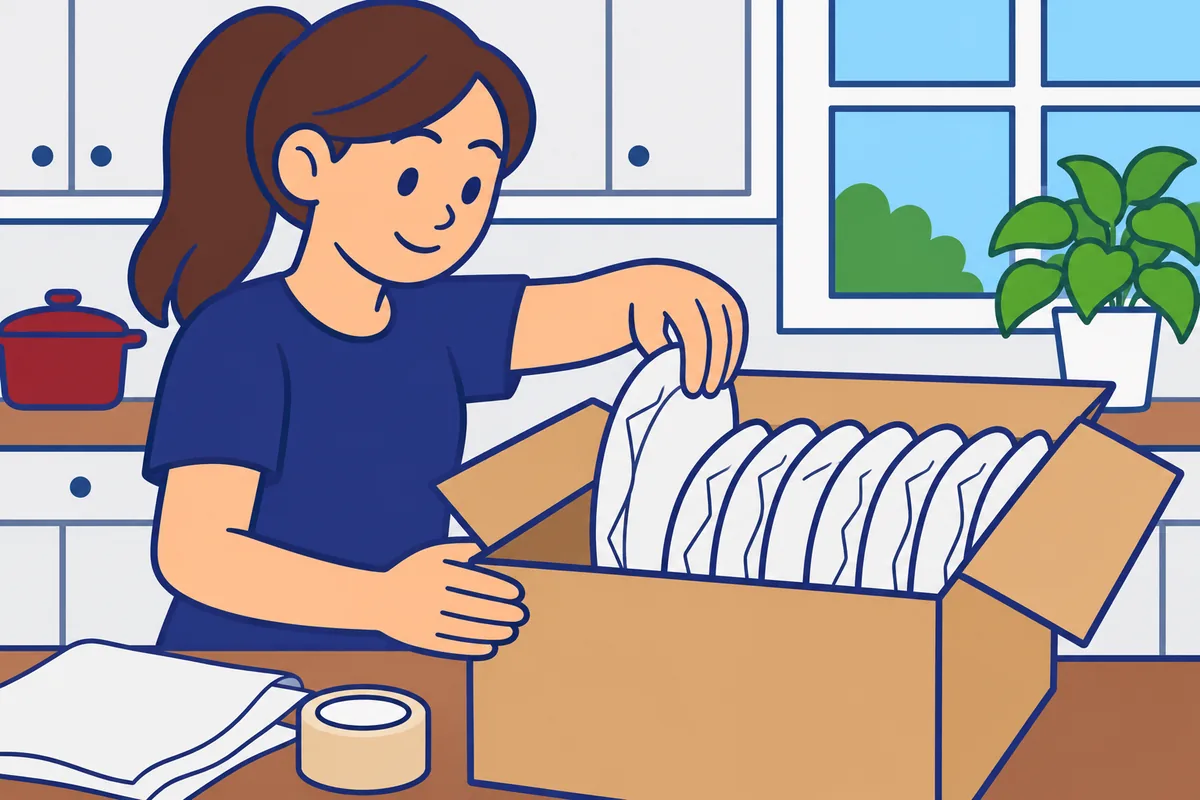
Wrap plates one at a time in packing paper. Place the plate in the center of a sheet, fold the corners over, and tuck the edges. Stand the wrapped plates on their edge inside the box, not flat, so the weight is spread evenly. Add a sheet of paper between plates to keep the edges from rubbing.
Bowls and cups get their own wrap. Put a little crumpled paper inside cups to support the rims. Glasses and stemware belong in cell dividers or in their own bubble wrap. Keep them upright near the top of the box; lighter items go above heavier ones. Heavier mugs can sit in the middle, but never on top of glasses.
Pack the box so nothing shifts
Put the heaviest items at the bottom, like dinner plates and mixing bowls. Fill every gap with crumpled paper or bubble wrap so nothing moves inside. Tape the seams with strong packing tape and label the box fragile kitchen plus the room it belongs to. Mark which side is up.
Do the shake test: a closed box should not rattle. If it does, open it and add more fill. Keep the total weight of each box under what you can comfortably lift, because a heavy box is more likely to be dropped. Use small boxes for dense items like plates and save larger boxes for light things like linens.
- Keep glasses in a separate box with cell dividers.
- Write the words fragile kitchen on every side of the box.
- Add a layer of bubble wrap on top before sealing.
- Carry boxes upright, never on their side.
- Stack boxes in the truck with the heaviest on the bottom.
Small kitchens and steep stairs: packing tips
In a small apartment kitchen, counter space is often limited. Pack in batches and keep a clear path to the door. Clear the counters and use the floor or a table as your packing station. Fill each box completely before starting the next one to avoid clutter.
On steep stairs, keep boxes upright and carry one at a time. Use a sturdy dolly or ask a friend to help, but do not overload the box. For stairs with a turn, strap the box to a hand truck. If the stairway is narrow, pass boxes up one by one and keep them upright so the contents do not shift.
When to let the pros pack your dishes
If you have a lot of glassware, antique china, or just not enough time, a moving crew can pack your kitchen with proper materials. Crews typically bring double-walled boxes, packing paper, and cell dividers, and they know how to protect fragile items on staircases. Many local movers offer packing as an add-on to a full move.
Professional packers work quickly and can finish a kitchen in a few hours. They also know how to wrap odd-shaped items like vases and serving platters. If some pieces are valuable or sentimental, the extra cost may be worth it. Ask your mover what materials they use and whether packing is available.
Pack a last-minute kitchen box
Keep out the dishes and utensils you will need the night before and the morning of the move. Pack them in a separate box labeled open first. Include plates, a few cups, and basic cookware. Put that box in your car or on top of the load so you can find it easily.
A last-minute box means you can make coffee and eat a meal before unpacking the rest of the kitchen. If you would rather leave the wrapping to someone else, ask a local mover for a packing estimate.
If you would rather spend moving week doing anything but wrapping plates, ask us for a packing and unpacking estimate. Packing and unpacking help can be added to your move.